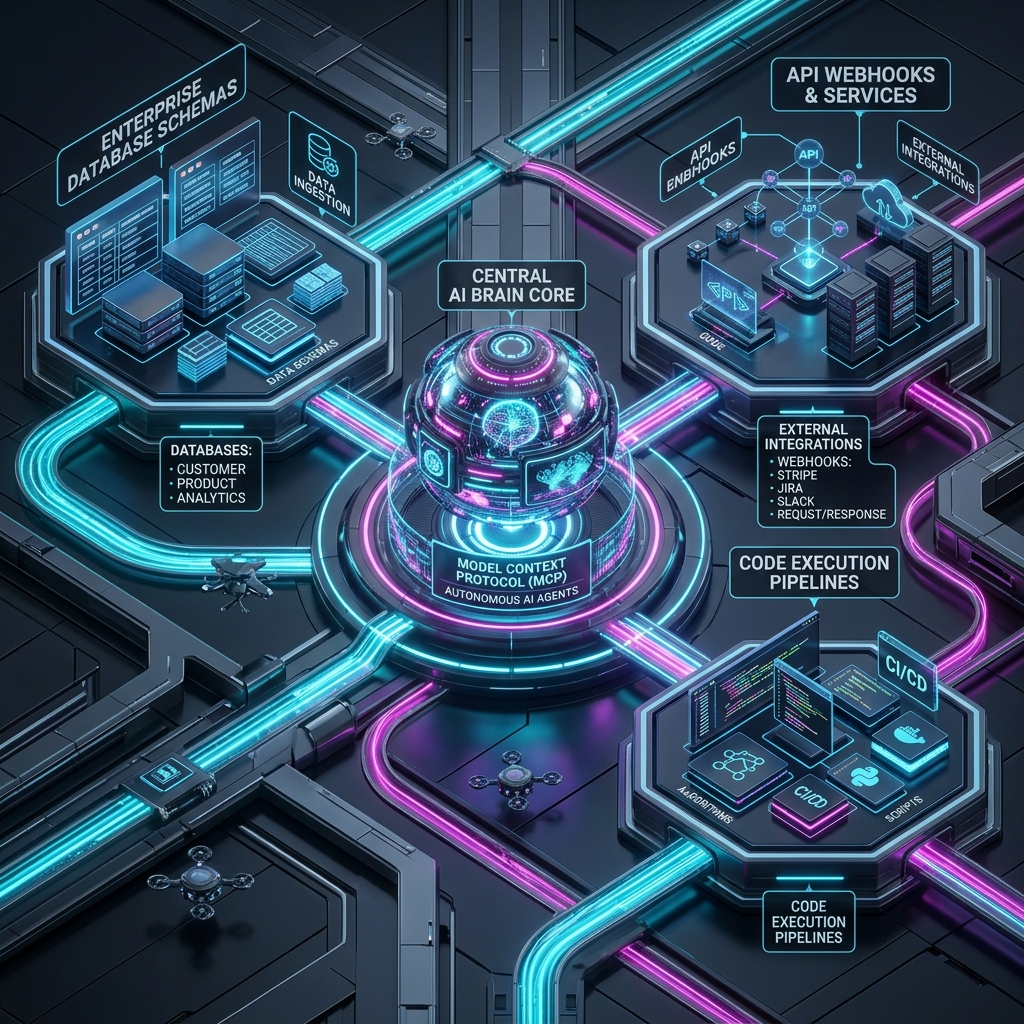
Autonomous AI agents are shifting from simple chat interfaces to fully integrated workforce extenders. By utilizing Anthropic's open Model Context Protocol (MCP), AI agents can inspect database schemas, call webhooks, execute code, and query application state securely.
1. What is Model Context Protocol (MCP)?
MCP provides a standardized protocol for LLMs to interface with external context sources, tools, and executable environments. Instead of writing ad-hoc API wrappers for every service, MCP standardizes how tools and resources are exposed to AI reasoning models.
2. Real-World Use Cases Implemented at Solidrix
- Autonomous Diagnostic Copilots: Agents inspect system logs, query database tables safely, and identify bounce anomalies without manual human intervention.
- Smart Customer Support & Ticket Routing: AI agents parse incoming user inquiries, check user subscription entitlements, and take action directly in the backend.
- Automated Content & SEO Generation: LLM agents curate technical documentation, format Markdown guides, and sync sitemaps automatically.
3. Security & Function Scope Controls
To prevent unauthorized actions, MCP tools implement strict parameter validation schemas, read-only permissions for diagnostic queries, and mandatory human-in-the-loop verification steps for critical production operations.