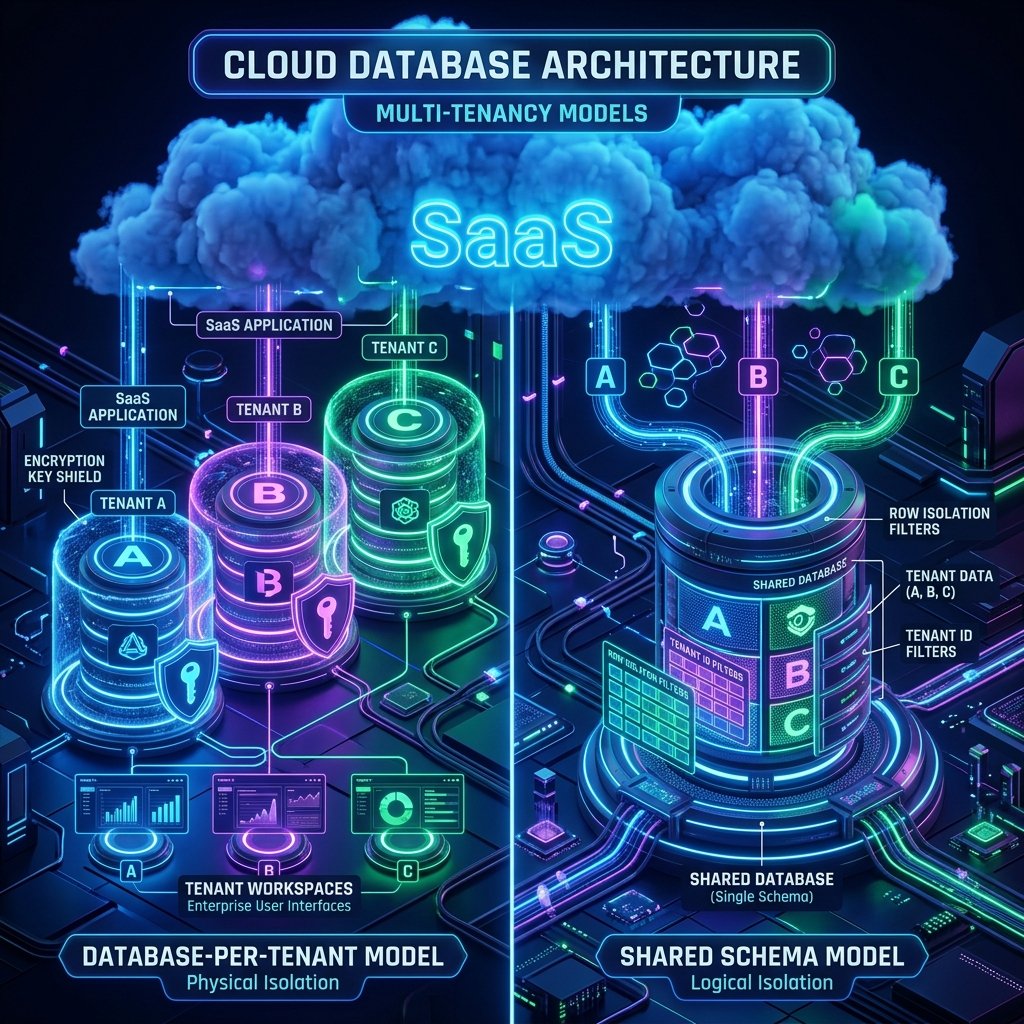
Choosing the right multi-tenancy model is one of the most critical architectural decisions when building B2B SaaS products. A wrong choice early on can lead to severe data leakage vulnerabilities or complex database migration hurdles as enterprise clients sign up.
1. Shared Schema with Row Isolation (Single Database)
In this model, all tenants share a single database, and every query is scoped using a tenant_id column via global Eloquent scopes or PostgreSQL Row-Level Security (RLS).
- Pros: Extremely low infrastructure cost, single database migration execution, easy aggregate analytics.
- Cons: Risk of developer error bypassing tenant scoping, noisy-neighbor performance impact.
2. Database-Per-Tenant Isolation
Each enterprise client gets a separate database instance. The application dynamically switches connections based on the authenticated request host or workspace ID.
- Pros: Absolute data isolation, zero risk of cross-tenant data leakage, independent database backup/restore.
- Cons: Higher database connection pooling overhead and migration management complexity across hundreds of databases.
3. The Solidrix Hybrid Multi-Tenancy Framework
At Solidrix, we employ a hybrid pattern: standard tiers run on a single shared schema with automated TenantScope global filters, while enterprise clients are provisioned dedicated databases on-demand.